 DOCUMENTATION
Sensors
Everything the U-2S collects comes from the equipment you fit to it. There are five places to put it: the nose, the Q-bay behind the cockpit, the wing pods, the spine and the belly. You choose the fit on the EFB Aircraft tab, and this chapter tells you what each item is on the real aircraft and what it does in ours.
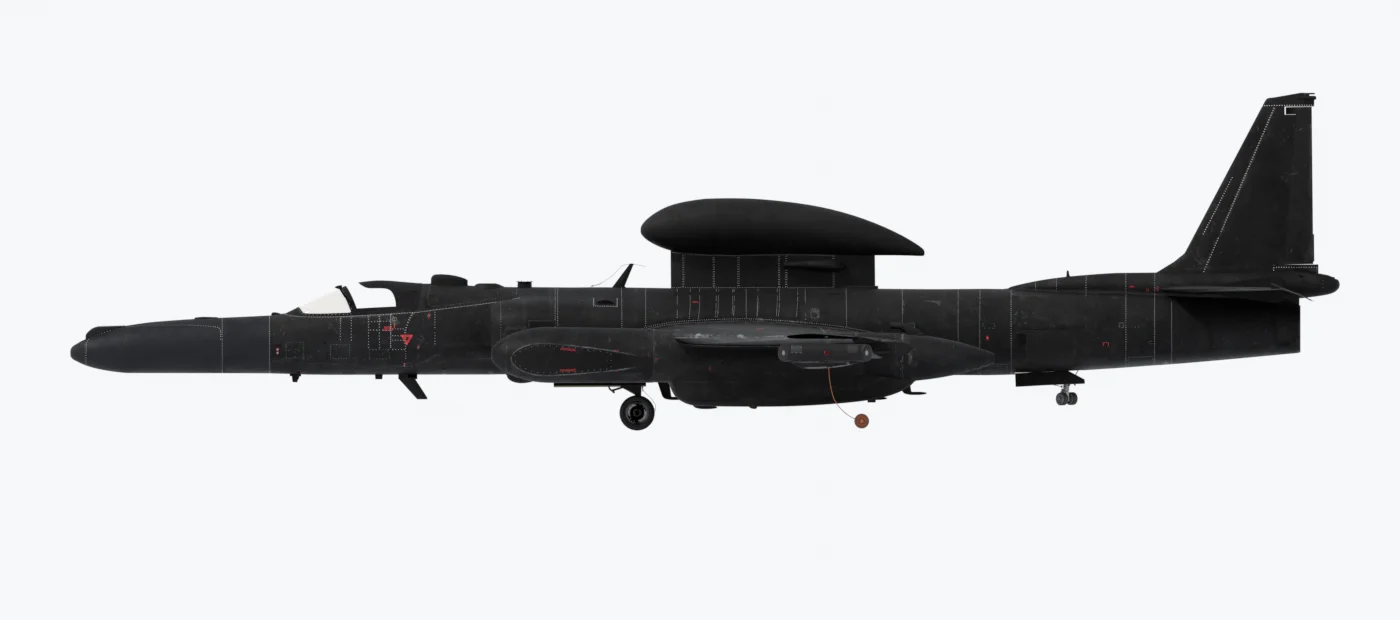
- Nose - ASARS-2 radar, SYERS-2A camera or the Standard nose, which carries no sensor.
- Q-bay - The optical bar camera (OBC), behind the cockpit. Standard nose only.
- Superpods - Senior Ruby, Standard or none.
- Senior Spear - An attachment on the left Senior Ruby pod.
- SPAN dorsal - The satellite antenna fairing on the spine.
- Dorsal sensors 1-3 - Three small fairings behind the canopy.
- Belly sensor 4 - A fairing under the fuselage.
Three sensors make pictures. The ASARS-2 radar, the SYERS-2A camera and the OBC are the working sensors, and you carry one at a time. Everything else on this page changes how the aircraft looks and what it weighs, and nothing more: signals intelligence is not simulated.
With the Standard nose and an empty Q-bay there is no imaging sensor at all, so the Mark IV panel is replaced by a blank plate.
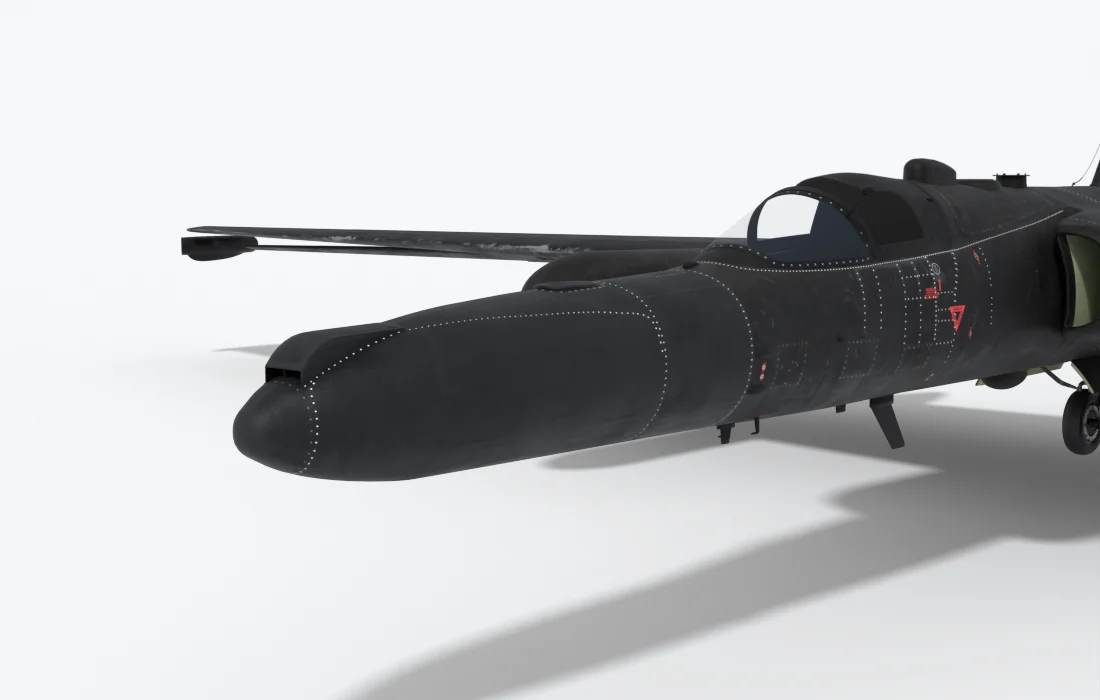 NoseASARS-2 RadarSynthetic aperture radar: radar map, search and spot. The long nose with the intake on top. MFD RDR and ASR pages.Open the page →
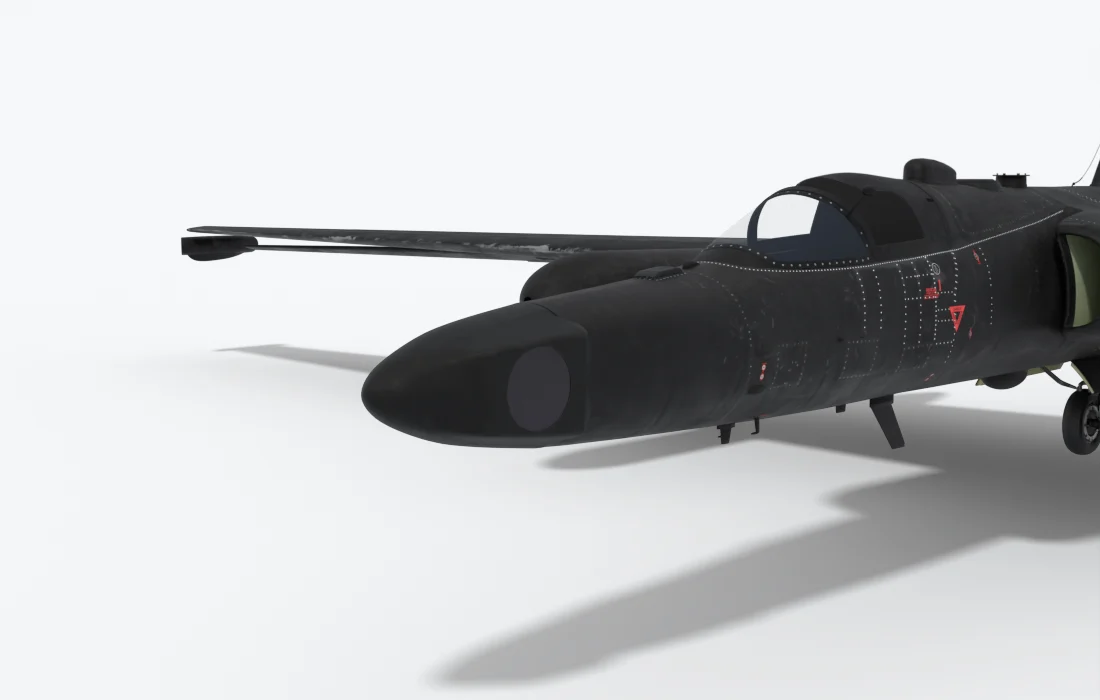 NoseSYERS-2A CameraElectro-optical and infrared camera, five bands. The nose with the window on its side. MFD CAM and SYR pages.Open the page →
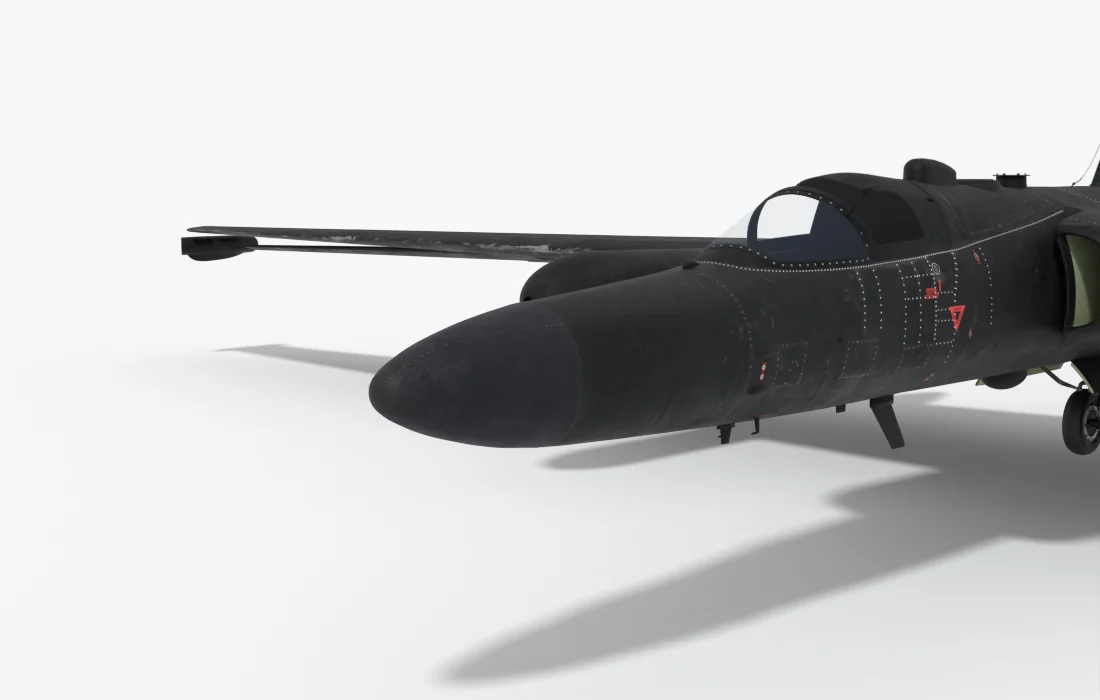 Q-bay, Standard noseOptical Bar Camera (OBC)Panoramic film camera behind the cockpit. It flies with the Standard nose, which has no sensor. MFD CAM and OBC pages.Open the page →
The Imaging Sensors Compared
| ASARS-2 | SYERS-2A | OBC | |
|---|---|---|---|
| What it is | Synthetic aperture radar | Electro-optical / infrared camera | Panoramic film camera |
| Where | Nose | Nose | Q-bay, with the Standard nose |
| Weight | 1,000 lb | 650 lb | 1,050 lb + 300 lb nose |
| MFD pages (PME) | RDR, ASR | CAM, SYR | CAM, OBC |
| Picture | Radar map, search and spot | Five bands, color or black and white | Black-and-white film look |
| Range or zoom | SRCH 10 - 320 NM, SPOT 0.1 - 40 NM | 0.5× - 73×, 90× in SWIR and MWIR | Up to 15× |
| Power | MODE STBY | MK IV MASTER, then MODE STBY | DRIFTSIGHT, then MK IV MASTER |
| Warm-up (Short / Realistic) | 30 s / 12 min | 30 s / 4 min | 30 s / 90 s |
| Operate | MODE 1-5, once airborne | MODE 1-5 | MODE OFF for the self-test, then 1-5 |
| Lowest height | 5,000 ft above the ground | 1,000 ft above the ground | 5,000 ft |
| Attitude limit | 20° of bank, 10° of pitch | 90° from the wings, 15° of pitch | None |
| Hand control | Moves the cursor or the patch | Aims it, 85° to the side, 15° fore / aft | Looks left and right, 45° |
| Darkness | No effect | Picture darkens, street lighting at night | Exposure follows the sun |
| Sim clouds and weather | No effect | No effect | No effect |
All three work with targeting points, and all three build their pictures from online map data - see Mission Equipment (PME) if a picture stays black.